
WHEN HEAT IS CRITICAL, CONTROL MATTERS. How precise electrical power control helps oil & gas operators maintain demanding heating processes
In oil and gas, heating is often essential to maintaining stable processes and protecting equipment. As industrial electrification grows, precise electrical power control becomes increasingly important, particularly where temperature, reliability and energy demand must be carefully managed. IGEL develops solutions for these demanding applications, combining heat management with technologies for motor starting and other critical electrical functions.
In oil and gas, heat is part of the process. Furnaces, heaters and electrically heated systems are used where temperature must be established, maintained and controlled with precision. Whether the objective is maintaining viscosity, preventing hydrate formation, supporting pre-heating or maintaining temperature in critical equipment and pipelines, the heating system can have a direct impact on process performance. It is delivering the right amount of electrical power, consistently and accurately, as process conditions change.
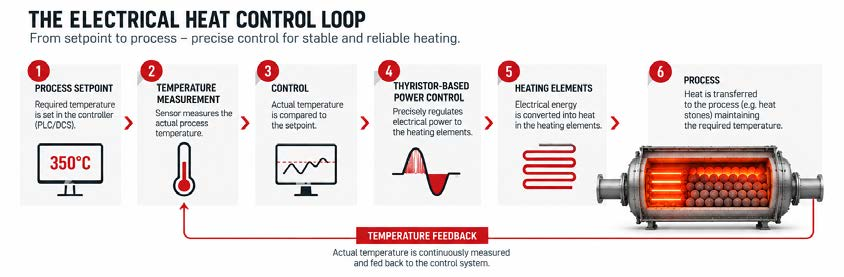
From Electrical Power to Controlled Heat
IGEL’s heat management solutions use thyristor-based digital power control to regulate electrical power accurately and responsively. Zero-crossing and phase-angle modes provide flexibility to match the power regulation method to the application, while synchronized multi-unit load sharing helps coordinate multiple heating units and manage electrical demand across the installation. The principle is straightforward: the process defines the required temperature, the actual temperature is measured, and electrical power is continuously adjusted to deliver the heat required to maintain the desired operating condition.
Designed Around the Application
No two heating applications have exactly the same requirements. Pipeline trace heating may need to maintain temperature across extended distances and changing environmental conditions. Viscosity management depends on keeping materials within the required temperature range, while hydrate prevention requires temperature to be maintained where formation could otherwise become a concern.
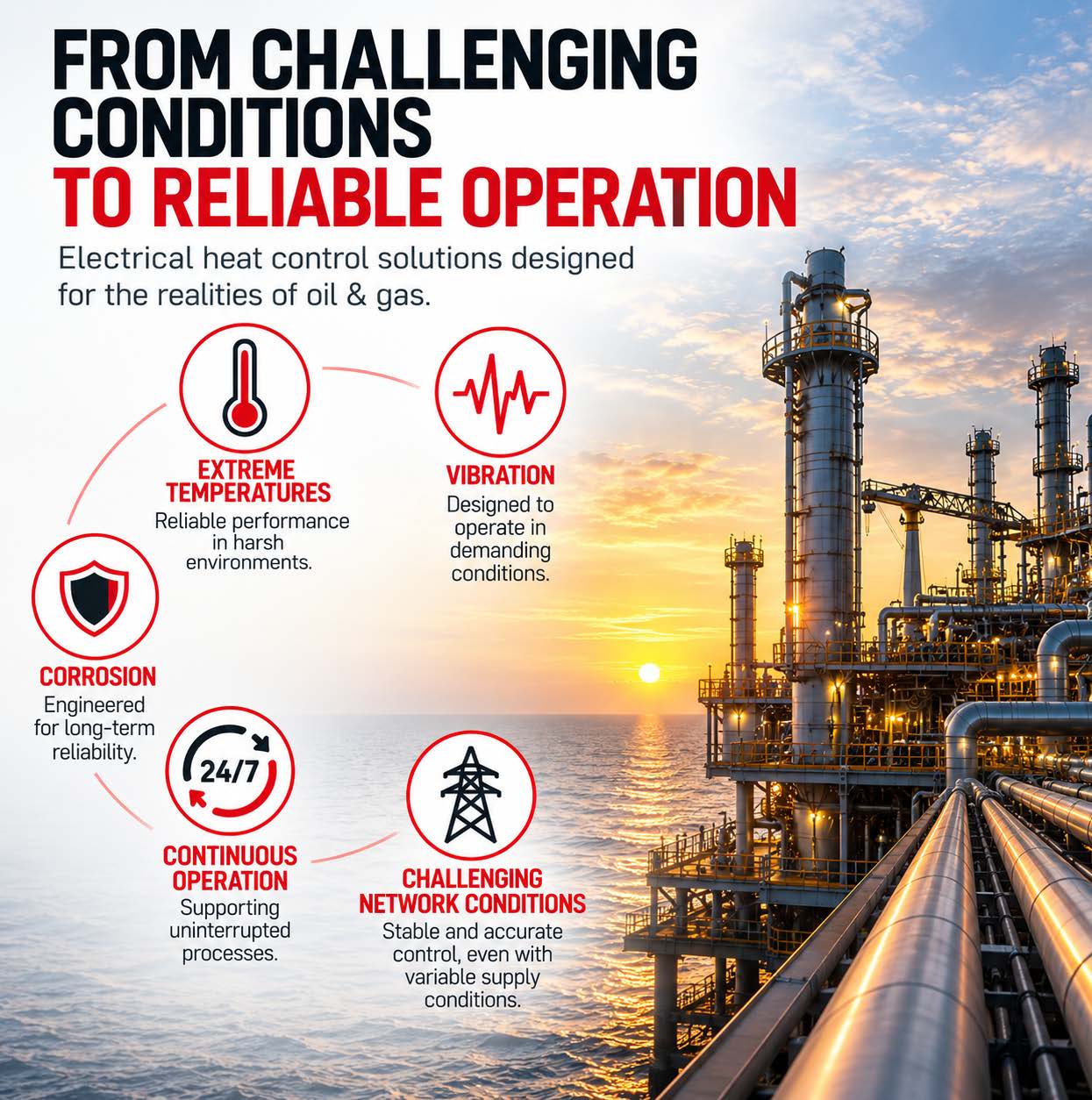
Precision Where Conditions Are Demanding
Oil & gas facilities rarely provide an easy operating environment. Electrical equipment may be exposed to extreme temperatures, vibration, corrosion, continuous operation and challenging network conditions. Offshore and marine installations introduce additional requirements.
Beyond Heat: Protecting the Equipment Behind the Process
Pumps, compressors, fans and other rotating equipment also need to start reliably and operate under demanding conditions. IGEL’s low- and medium-voltage motor starting solutions help control starting current and reduce electrical and mechanical stress on critical rotating equipment.
What Electrification Asks of the Installation Electrifying process heat and moving to larger electric motors places demand on the transformers, switchgear and cabling that have to carry the load. Controlled electrical power changes what has to be installed. Limiting starting current allows equipment to be sized around the running load rather than he starting transient. Supplying heating loads directly at medium voltage reduces the current the installation has to carry and can remove a transformation stage altogether. Synchronizing and sequencing multiple heating units limits the coincident peak the supply must meet.
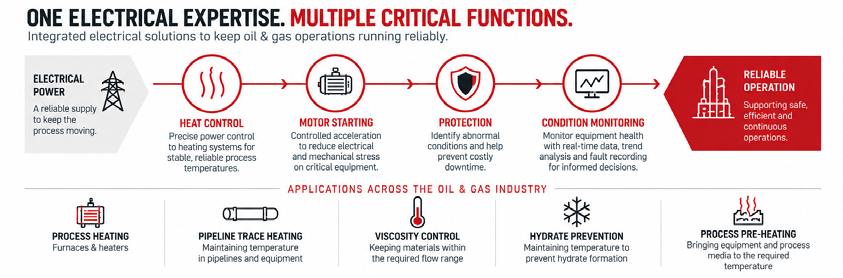
Control What Matters
It is about controlling electrical power precisely enough to maintain the conditions the process demands, reliably and continuously. From electrical heat management to controlled motor starting, protection and condition monitoring, IGEL brings together the technology and application expertise needed to support critical operations in demanding industrial environments. Because when the process depends on heat, control is what keeps it working.
For more information :
www.igelelectric.de
contact@igelelectric.de